October 1, 2026
Why People Leave Church Without Saying Goodbye
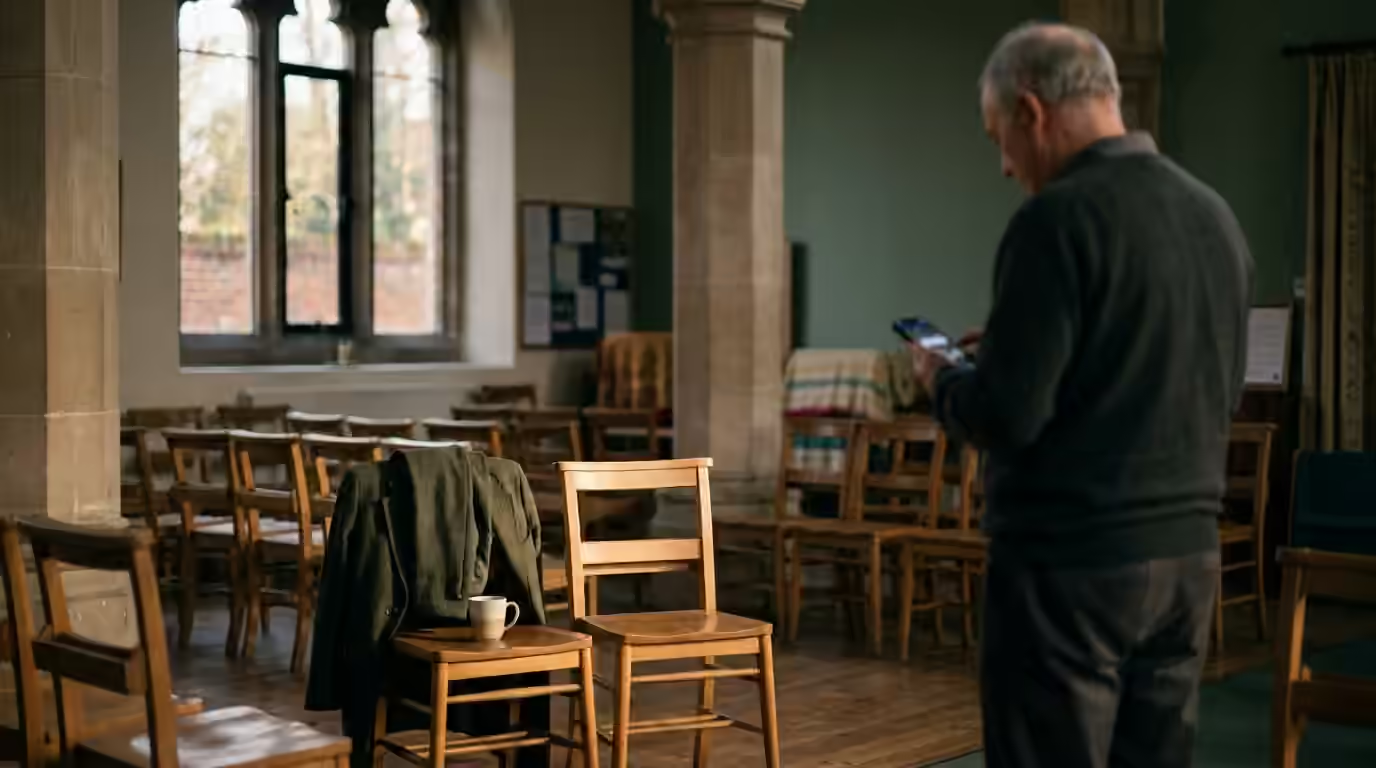
Most weeks our service ends the same way. The pastor asks whether anyone is new this morning, and would they stand and say their name. Some weeks nobody does. Some weeks a young couple stands, or a family, or three friends who came together. We clap. We shake hands, we hug them, we pray with them, we walk them over to the people who lead the ministries they might join. It is one of the happiest moments in the life of a church.
That is why the question of why people leave church is so easy to miss. Arrivals are announced. Departures are not. People stand up to join. Nobody stands up to say they are going.
The sum stays the same
A church can gain a family every few weeks and still not grow. The seats stay as full as they were, and no fuller. The number is not the point in itself. The number is a signal. If people keep arriving and the room never fills, then people are leaving at the same rate, quietly, without anyone counting them.
I once belonged to a congregation that had bought two buildings, side by side, because one building could not hold everybody. But when I started attending that church, both stood nearly empty. Maybe one seat in ten was used. I asked one of the pastors what had happened. It turned out that, years earlier they had so many members that they ran out of room in the first building. So they bought the second building. But then people gradually and quietly left, one at a time, without saying anything. Now they were talking about selling the second building!
Nobody made that decision. It happened one absence at a time.
The silent no
People who cannot say no out loud say it by disappearing. There is no email. There is no meeting. Nobody writes to the pastor to say that they are too hurt to come back, or that a conflict with another member has made the building unbearable, or that they have nothing left to give this week.
The reasons sit underneath the silence. Hurt. Exhaustion. A new job, a new baby, a move across town. Conflict that never got named. A season of spiritual attack where prayer went dry and church felt like pretending. In every one of those, saying it out loud costs more than the person has, so they say nothing and stay home.
In Luke 7, Jesus arrives at the gate of a town called Nain, where a widow is burying her only son. What stays with me is the fact that She does not ask the Lord for anything. She does not pray. While in other stories in the gospels, people run to Jesus, kneel, beg, or even send friends to ask him for help. But here, the widow is only weeping, and Jesus tells her not to weep, and he touches the bier and raises her son.
Sometimes grief takes away even the ability to ask. Our Lord did not require the request. He saw her and moved toward her and helped. He expects the same from us.
Some people stop coming to church because they are too heavy to come and ask. They close the door and sit alone, and the sitting alone makes it even worse. You and I can see that. The person inside it often cannot.
You rarely lose one person
Losing a member in a church is not like losing a member in a gym. People come attached to other people.
If the person who stops coming is the one who gets the family out of the house on Sunday morning, then the whole family stops coming. If they brought a group of friends and kept inviting them week after week, the friends drift too. If they were the one in your congregation who talked about Jesus at work and brought people to meet the Lord, that ministry stops as well. One quiet absence costs your church, a household now and the people they would have brought later.
Everyone assumes someone else will call
Let’s say you do notice if someone has stopped coming. Then a second problem appears. Who will call him?
The pastor assumes a small group leader is closer to them. The small group leader assumes the pastor keeps track of the whole church. Both look at the person’s friends and think, they see each other all week, surely one of them has called. The friends look back at the leadership and think, we are not leaders here, it is not our duty.
Psychologists named this a long time ago. Darley and Latané’s 1968 study found that a lone bystander helped every time, while only 62% helped when they believed four others were present. The more people there are, the less responsible any one of them feels.
So a church full of caring people is exactly the place where nobody moves. Meanwhile the person at home counts the weeks, and a month of silence confirms what they already feared, that nobody noticed and nobody cared. Peter warns that our enemy walks about like a roaring lion, looking for someone to devour (1 Peter 5:8). He does some of his best work in that month.
Notice early, and the conversation changes
Time changes what you can say.
Call in the third week and you can say, we missed you. Call in the eighth month and you are asking, why did you leave. The first is an act of love. The second is feels like an interview, and by then the person has already developed a new Saturday night and Sunday morning routine. Their life style has closed over the gap.
So when you call, do not open with the question. In Matthew 18:15 we are told to go to our brother privately, and the gain is the brother himself, not an explanation. Say the true thing. We noticed you were not here. We missed you making coffee before the service. We missed you out on the grass playing football with the youth after lunch. We want you back.
That tells someone they did not quietly cancel a subscription. A church is not a bank. There is no button that closes an account without anybody looking up.
Noticing takes a system, not a better memory
No pastor can hold three hundred faces in his head and spot the one that has been missing for five weeks. He will spot it eventually, and eventually is the problem.
This is why I built Velyora. You print one QR code and put it by the door. Members point their phone camera at it and check in. No app to install, nothing to download, and after the first time it takes one tap. Their names, contact details, birthdays and prayer requests are locked on their own phone before they ever reach us, so only your login and the helpers you choose, can open them. I cannot read them, and if someone stole our servers tomorrow they would find nothing readable about your members.
Then you log in and see what human memory cannot hold: Who came this week, and who used to come every week and has been missing. You can hand the youth group to one leader and the women’s group to another, so each person gets the alert for their own people. Each leader in your church will be responsible for his group, instead of everyone assuming someone else will call.
You also see gradual changes. Someone who arrives later and later each week is often on the way to leave the church, before they ever miss a Sunday, which I wrote about in what church members arriving late are telling you.
Questions pastors ask
Do our members have to install anything?
No. They use the camera and browser already on their phone. If someone has no smartphone, keep a tablet or laptop at the door with the kiosk page open (We give you a kiosk web page after you sign-up for free), and they type their name instead.
Is it strange to track who attends church?
You already know who was there. You simply forget, because no one can remember three hundred people week after week. Writing it down lets you act on what you noticed. Tell your church plainly what you record and why, and it stops feeling like surveillance and starts feeling like care. By scanning the qr code, they can also send you a secure, private and encrypted prayer request.
What should we actually say when we call a member who has stopped coming?
Just say that you noticed and you missed them. Name something specific they did. Do not lead with the question of why they stopped coming, and do not put pressure on them.
What if they do not want to come back?
At least they will tell you, and you will know it, rather than guess. Even then, the call is worth making. A person who leaves knowing they were missed carries something different away from one who leaves believing nobody saw.
How quickly should we follow up?
Sooner than feels necessary. Two or three missed weeks from a regular member is enough to send a message. It costs very little to be wrong about it.
In Luke 15:4, Jesus asks which of us, having lost one sheep out of a hundred, would not leave the ninety-nine and go after the one until we found it. He assumed we would notice the one was gone.
If you want to see who has been missing this Sunday, you can start free at Velyora and have your QR code printed before the service.